Dorm Groceries on 40 Dollars a Week: A Research Backed Guide for Students Who Want to Save Without Starving
Learn how to eat well on a 40 dollar weekly grocery budget with this research backed guide for college students. Includes meal plans, grocery lists, psychological strategies, and budgeting tips designed for student life.
11/26/20254 min read

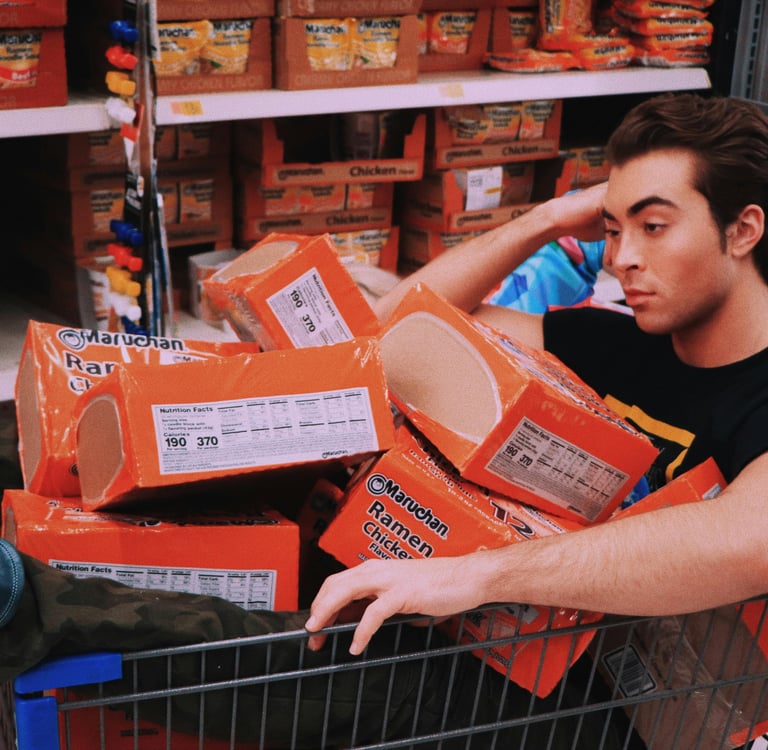
Food is one of the biggest money leaks for college students. Groceries keep getting more expensive, takeout is addictive, and busy schedules make planning feel impossible. If you are trying to survive on a student budget, you have probably told yourself things like:
Eating healthy is too expensive
Cooking takes too much time
It is cheaper to order food when you are tired
Groceries never last long enough
Meal prep is boring
The truth is that your food habits affect more than your wallet. Research shows that food insecurity among students is linked to higher stress, lower grades, and reduced mental health (Watson et al., 2021). Eating inconsistently or relying on takeout creates both financial and academic strain.
The goal of this guide is simple: show you how to eat well, save money, and stay full on 40 dollars a week, using actual research on student spending habits and behavioral psychology.
If you want to understand the full picture of student expenses before building your grocery plan, read The Real Cost of Being a College Student in 2025. It pairs perfectly with this guide.
1. Why Students Overspend on Food Without Realizing It
Food is the hardest budget category to control because it is tied to emotions, stress, convenience, and environment.
Research shows students overspend on food due to:
Irregular schedules
Skipping meals
Poor planning
Stress eating
Decision fatigue
Social pressure
Limited time to cook
Availability of restaurants near campus
A study by De Palma et al. (2022) found that inconsistent eating routines dramatically increase impulsive food spending. This means the problem is not the food itself. It is the lack of structure around it.
If you want to learn more about the psychology behind spending, read The Science of Why Students Overspend and How to Trick Your Brain Into Saving More. It will help you understand your impulses around food.
2. What You Can Actually Buy on 40 Dollars a Week
Before we get into the meal plan, here is what your 40 dollar weekly grocery list should include.
Prices may vary slightly by region, but this list works across Canada.
Protein (10 to 14 dollars total)
Eggs (18 pack)
Chicken thighs or drumsticks
Canned tuna or canned beans
Greek yogurt tub (optional week to week)
Carbs (5 to 8 dollars total)
Rice (1.8 kg bag, lasts multiple weeks)
Pasta (2 boxes)
Potatoes or oats
Vegetables (7 to 10 dollars total)
Frozen mixed vegetables
Frozen broccoli
Carrots
Onions
Frozen vegetables are cheaper, last longer, and retain more nutrients than many fresh options.
Fruits (4 to 6 dollars total)
Bananas
Apples
Frozen berries (optional and lasts long)
Other essentials (5 to 7 dollars total)
Bread or tortillas
Peanut butter
Tomato sauce
Milk or plant based milk
Basic spices (salt, pepper, garlic powder)
This list hits everything you need: high protein, carbs, fiber, fruits, and vegetables. It also lasts an entire week without requiring mid week purchases.
3. A 40 Dollar Weekly Meal Plan That Actually Works for Students
This is a simple, repeatable structure you can follow every week.
Breakfast Options (cost per portion 40 cents to 90 cents)
Oatmeal + peanut butter + banana
Scrambled eggs + toast
Greek yogurt + frozen berries
These are filling, nutritious, and cheap.
Lunch Options (cost per portion 1 dollar to 1.50 dollars)
Rice + chicken + frozen vegetables
Pasta + tomato sauce + tuna
Egg fried rice with vegetables
Lunch is your most predictable meal. Meal prep three to four servings at once.
Dinner Options (cost per portion 1 dollar to 2 dollars)
Pasta with vegetables and chicken
Oven-baked potatoes + chicken + broccoli
Stir fry with rice and mixed vegetables
Snacks (25 cents to 1 dollar each)
Apples
Carrots
Peanut butter toast
Greek yogurt
Hard boiled eggs
This keeps your hunger steady so you do not overspend later.
If you want help reducing other financial leaks while eating this way, read 5 Financial Mistakes Almost Every College Student Makes. It teaches you how to keep food from becoming a money trap.
4. The 4 Psychological Strategies That Make This Work Long Term
Saving money on groceries is not just about buying cheaper food. It is about understanding and controlling the behaviors that cause overspending.
Here are the psychological strategies that help the most:
Strategy 1: Cook Once, Eat Three Times
Students overspend because they cook when they are hungry. When you are hungry, tired, and stressed, takeout feels like the only option.
Meal prepping removes decision fatigue.
A study in the Journal of Behavioral Nutrition found that pre planned meals reduce impulsive food spending by up to 38 percent (Higgs and Thomas, 2020).
Strategy 2: Build a weekly routine instead of a strict meal prep
Strict meal prep can feel restrictive, so use a flexible weekly system:
3 go to breakfasts
2 go to lunches
2 go to dinners
Snacks always stocked
This gives structure without boredom.
Strategy 3: Remove food delivery triggers
Delete:
SkipTheDishes
Uber Eats
DoorDash
Wendy’s/Tim Hortons apps
You can always re-download if you need, but removing daily access prevents impulse ordering.
Strategy 4: Shop with a list and stick to the perimeter of the store
Research shows that shopping with a list reduces spending by more than 20 percent (Stilley et al., 2010).
The perimeter of the store has essentials: produce, dairy, meat, bread. The middle aisles contain impulse items.
Follow the list, avoid the temptation.
5. How to Make Cheap Meals Taste Good
You do not need to be a chef. You just need seasoning.
Essential spices to invest in:
Garlic powder
Onion powder
Paprika
Salt
Pepper
Chili flakes
These can last months.
Easy flavor upgrades:
Add spices to everything
Mix frozen vegetables with fresh onion
Add garlic powder to rice
Add lemon or vinegar to chicken
Use small sauces like soy sauce or sriracha
Eating on a budget tastes better when you season well.
6. How to Save Even More on Groceries
If you want to stretch your 40 dollars further, use these smart student strategies:
• Buy items that last weeks
Rice, pasta, oats, peanut butter, frozen vegetables.
• Download price matching apps
Flipp, Reebee, and local store apps help you compare.
• Buy store brands
Same quality, lower cost.
• Buy in bulk but only for long shelf life items
Do not bulk buy perishable foods.
• Go grocery shopping after eating
Shopping hungry increases spending.
If you want to understand how food spending fits into your full budget, check out The Real Cost of Being a College Student in 2025.
7. A Student Grocery Challenge You Can Try This Month
To help you stay consistent, try the 7 Day No Takeout Challenge.
Rules:
No food delivery
No buying meals on campus
All meals cooked from your 40 dollar list
Track how much you save
Most students save between 40 and 100 dollars during this challenge.
If you struggle with impulse spending, read The Science of Why Students Overspend to learn how to rewire your habits.
Related Reading
Final Takeaway
You can absolutely eat well, stay full, and save money on a 40 dollar weekly grocery budget. The key is structure, consistency, and understanding the psychology behind your decisions.
The more you build these habits now, the easier adulthood will become. Your health improves, your bank account stays stable, and your stress levels drop.
And your next step? Read 5 Financial Mistakes Almost Every College Student Makes to level up your entire money system.